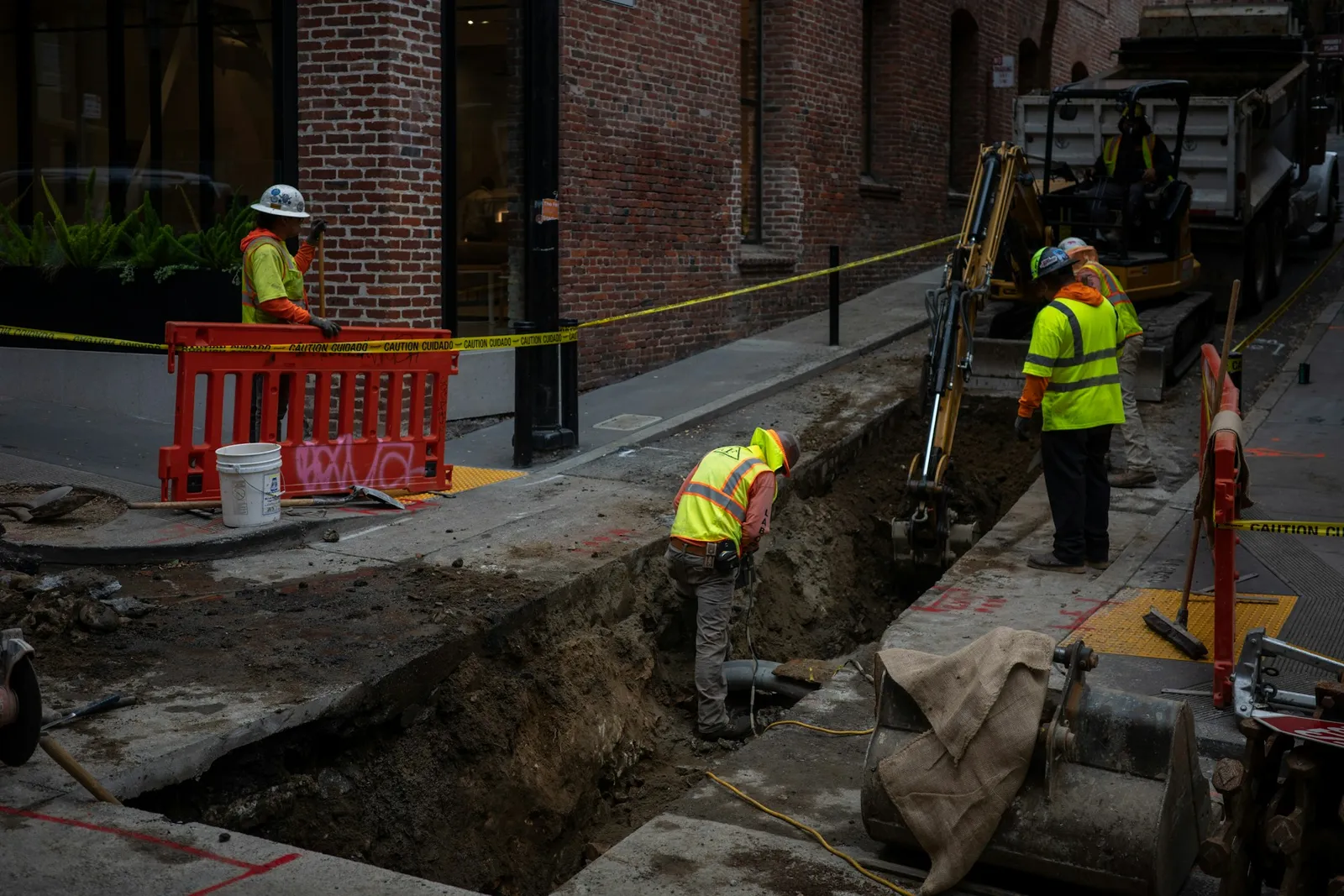
California state departments can award a contract up to $484,000 without ever advertising it, as long as the winner is a certified small business or Disabled Veteran Business Enterprise and the department collected price quotes from at least two certified firms. That path is called the SB/DVBE Option, and on March 18, 2026 the Department of Finance raised its public works ceiling from $461,000 to $484,000.
Quick answer: Under Government Code section 14838.5, a California state department may award a contract from $5,000.01 to $249,999.99 for goods, services, or IT directly to a California certified small business, microbusiness, or DVBE, based on quotes from two or more certified firms, with no advertising required and no protest process. For public works, a separate ceiling set by Government Code section 14838.7 and Public Contract Code section 10105(b) is adjusted every two years by the Department of Finance. Budget Letter 26-02, issued March 18, 2026, put that number at $484,000. If you hold an active certification, these are the fastest contracts in California to win and the hardest ones to find, because they never appear as advertised bids.
What is the SB/DVBE Option, exactly?
It is a legal shortcut that trades open competition for speed, restricted to certified firms.
A department that wants to buy something in the covered dollar range can skip the California State Contracts Register posting, skip the formal solicitation timeline, and simply ask certified firms what they would charge. The rules from State Contracting Manual section 1405.3:
- Award requires responsive price quotations from at least two responsible California certified small businesses or microbusinesses, or at least two certified DVBEs. The two quotes have to come from the same category. Mixing one SB quote with one DVBE quote does not satisfy it.
- Advertising is optional. Departments may post to the California State Contracts Register, and DGS waives the posting fee, but nothing requires it. Advertising for fewer than 10 days is allowed without DGS approval, which is not true of standard solicitations.
- The solicitation can be verbal or written, and buyers are told to consider best value criteria rather than defaulting to low price.
- The DVBE participation exemption requirement does not apply, so the winning firm does not have to assemble 3% DVBE subcontracting on top of the award.
- There are no protest provisions. Award can happen in as little as a day.
The authority sits in Government Code section 14838.5(a) and (b) for goods, services, and IT, and Government Code section 14838.7 with Public Contract Code section 10105(b) for public works.
How much can California award without a public bid in 2026?
Two ceilings, and they are far apart.
| Purchase category | Statutory authority | 2026 ceiling | Quotes required |
|---|---|---|---|
| Goods | GC 14838.5(a), (b) | $5,000.01 to $249,999.99 | 2 or more certified SB/Micro, or 2 or more DVBE |
| Services | GC 14838.5(a), (b) | $5,000.01 to $249,999.99 | Same |
| IT goods and services | GC 14838.5(a), (b) | $5,000.01 to $249,999.99 | Same |
| Public works | GC 14838.7, PCC 10105(b) | Up to $484,000 | Same |
The public works number is the one that keeps moving, and most of the guidance floating around the web is out of date. Here is the actual trajectory:
| Effective | Authority | Public works SB/DVBE Option ceiling |
|---|---|---|
| Through Feb 2024 | Prior Budget Letter | $388,000 |
| March 1, 2024 | BL 24-04, announced in DGS Broadcast Bulletin P-02-24 | $461,000 |
| March 18, 2026 | BL 26-02 | $484,000 |
That is a 25% increase in the no-advertising public works ceiling in two years. If you are a certified small contractor doing trenching, paving, roofing, HVAC replacement, or tenant improvements for state facilities, the pool of work a department can hand you on two quotes just got materially larger.
Why did the public works threshold rise to $484,000?
Because it is indexed to construction inflation, not to a policy decision.
Public Contract Code section 10105 requires the Director of Finance to adjust the State Contract Act project cost thresholds biennially to track the annual change in the California Construction Cost Index used by DGS. Budget Letter 26-02 supersedes BL 24-04 and sets the following figures for calendar years 2026 and 2027:
| Public Contract Code section | What it governs | 2026 and 2027 amount |
|---|---|---|
| 10105 | DGS oversight required for projects over this amount | $484,000 |
| 10108 | Maximum cost budgeted as a minor capital outlay project | $1,157,000 |
| 10108.5 | DGS oversight for departments in the Resources Agency | $1,502,000 |
| 10108.5 | Competitive bid required for Department of Forestry and Fire Protection projects over | $150,000 |
| 10108.5 | Maximum day labor amount, Resources Agency departments | $303,000 |
| 10108.6 | Finance approval needed for DGS oversight exemption above | $3,000,000 |
The minor capital outlay line matters too. A state project budgeted under $1,157,000 as minor capital outlay moves on a different and much faster approval track than a full capital outlay project, and a large share of those projects land in the SB/DVBE Option range once they are broken into trade packages.
What do I give up by taking an SB/DVBE Option award?
Three things, and none of them are usually worth turning the work down over.
You lose the 5% preference. Government Code section 14838.5(a) removes the small business preference when a department uses the Option, which makes sense given every quoting firm is already certified. On open competitive solicitations that preference is real money: 2 CCR section 1896.8 applies 5% of the lowest non-small-business bid as a scoring credit, capped at $50,000 per bid, and combined preferences and incentives are capped at 15% of the bid amount or $100,000, whichever is less.
You lose the protest. No advertising and no protest provisions cut both ways. If a department picks the other firm’s quote, there is no formal challenge process the way there is under Public Contract Code sections 10306, 10345, or 12102.2 on advertised solicitations.
You compete on price against two or three firms, quickly. A verbal request for a quote due in 48 hours rewards contractors who already know their unit costs cold. It punishes anyone who needs two weeks to price a job.
What you gain is the part that decides whether a small firm survives its first few years in government contracting: a short cycle from request to signed contract, minimal proposal cost, and a competitive field of two or three instead of eleven.
Public works comes with its own non-negotiables regardless of the award method. An SB/DVBE Option public works contract still triggers prevailing wage, certified payroll, and DIR contractor registration. A streamlined award does not streamline your labor compliance.
How does the SB/DVBE Option compare to a formal competitive bid?
| Factor | SB/DVBE Option | Formal IFB or RFP |
|---|---|---|
| Advertising | Not required | Required in the California State Contracts Register |
| Who may compete | Certified SB, microbusiness, or DVBE only | Any responsible bidder |
| Minimum responses | 2 quotes from certified firms | Per the solicitation |
| 5% SB preference | Does not apply | Applies, capped at $50,000 per bid |
| DVBE participation requirement | Exempt | Typically 3% goal or a good faith effort |
| Protest process | None | Yes, with statutory deadlines |
| Time to award | As little as one day | Weeks to months |
| Ceiling | $249,999.99 goods/services/IT, $484,000 public works | No ceiling |
How do certified firms actually get invited to quote?
Since nothing is advertised, the invitation comes from a buyer who already knows your name. Four things move you onto that list:
- Keep the certification active and correct. An expired DGS certification disqualifies you instantly, and the buyer will not call to tell you. Certification and commodity codes live in your Cal eProcure profile, and buyers search that database by code when they need two quotes.
- Match your commodity and service codes to what departments actually buy. Buyers filter the certified supplier search by UNSPSC code. If your codes are wrong or thin, you are invisible in the exact query that would have found you.
- Send a one-page capability statement with the certification number near the top. Named contracting officers and Small Business and DVBE Advocates at each department keep informal lists. A capability statement is how you get on one.
- Win small and be easy to work with. A buyer who needs two quotes by Thursday calls the firm that answered fast last time. Every state department reports against a statewide goal of 25% small business participation and 3% DVBE participation, so buyers who already meet those goals through you have a direct reason to keep calling.
Volume backs this up. The state estimates its small business contracting generates roughly $5.9 billion in new economic activity annually, with DVBE contracts adding about $1.2 billion. A meaningful slice of that never runs through a public bid at all.
Where does FindBids fit?
The SB/DVBE Option is the invisible half of California procurement, and the visible half is still where most of your revenue comes from. The problem is that the visible half is spread across more than 400 state and local portals, each with its own login, its own posting format, and its own habit of burying a critical addendum on page 60.
FindBids reads what your business actually does and matches it to live California contracts by meaning, not keywords, then pulls the full bid documents for you automatically. Legacy tools make you pick NAICS codes and keywords and still leave you downloading documents by hand. Vector semantic search compares your company and service description against live bid titles, Gemini Pro then runs document-level analysis and scoring on the shortlist, and a browser agent retrieves the complete solicitation package from gated portals that normally require a manual login. Plans start at $150 per month, against enterprise procurement platforms that run $6,000 to $25,000 or more per year.
Send FindBids a short description of your company and get back a free personalized match report of the live California bids that fit you right now. It takes one paragraph, and it shows you what a semantic match looks like against your actual capabilities.
Frequently asked questions
Does the SB/DVBE Option apply to cities, counties, and school districts?
No. Government Code sections 14838.5 and 14838.7 govern California state departments. Local agencies run under their own purchasing ordinances, and many of them have comparable informal thresholds, such as the CUPCCAA informal bidding limits used by participating cities, counties, and districts for public projects. Read the local agency’s purchasing policy, because it is the entire rulebook there.
Can a department split a large purchase into pieces to stay under the ceiling?
No. Splitting an order to evade a competitive bidding requirement or a purchasing authority limit is prohibited, and DGS audits for it. What is legitimate is packaging a genuinely separable scope, such as awarding a roofing trade package on one contract and an HVAC package on another, when each package is a distinct piece of work.
Do I need to be a microbusiness to use the SB Option?
No. Any active California certified small business qualifies, and microbusinesses are a subset that also qualify. The Option’s two-quote requirement is satisfied by any two certified small businesses or microbusinesses, in any combination of the two.
Does the SB/DVBE Option cover public works under prevailing wage rules?
Yes, and prevailing wage still applies in full. The award method changes how the contract is competed, not what labor law requires. You still need active DIR registration before bidding or performing, you still pay the applicable prevailing wage determination, and you still file certified payroll records.
What is the difference between the SB/DVBE Option and a non-competitive bid contract?
The SB/DVBE Option is a competitive method with a narrowed field, requiring at least two quotes from certified firms. A non-competitive bid contract, sometimes called an NCB, involves no competition at all and requires a written justification plus DGS approval showing that only one supplier can meet the need. The Option needs no such justification, which is why buyers reach for it far more often.
Frequently Asked Questions
What is the SB/DVBE Option in California?
The SB/DVBE Option is a streamlined award method under Government Code section 14838.5 that lets a California state department award a contract directly to a certified small business or Disabled Veteran Business Enterprise after collecting price quotes from at least two certified firms, with no requirement to advertise the solicitation. The ceiling is $249,999.99 for goods, services, and IT, and $484,000 for public works contracts as of March 18, 2026.
How much can a California agency award without a public bid in 2026?
Up to $249,999.99 for goods, services, and information technology, and up to $484,000 for public works, when the award goes to a California certified small business, microbusiness, or DVBE through the SB/DVBE Option. The public works figure rose from $461,000 to $484,000 effective March 18, 2026 under Department of Finance Budget Letter 26-02. Both ceilings require quotes from two or more certified firms in the same category.
Do I get the 5% small business preference on an SB/DVBE Option contract?
No. Government Code section 14838.5(a) removes the 5% preference when the department uses the SB or DVBE Option, because every firm quoting is already certified and there is no non-small-business bid to discount. The preference applies on open competitive solicitations, where it is capped at $50,000 per bid.
Can I protest an SB/DVBE Option award?
Generally no. The State Contracting Manual treats the SB/DVBE Option as an informal method with no protest provisions and no advertising requirement. If the price and the paperwork are right the department can move from quote to signed contract in a matter of days, which is part of why buyers like it.
How do I find SB/DVBE Option opportunities if they are never advertised?
You get on buyers' lists before they need you. Keep your DGS certification active, keep your Cal eProcure profile and commodity codes current, and put your certification number on a one-page capability statement you send to named contracting officers. FindBids reads what your business actually does, matches it to live California state and local bids by meaning rather than keyword, and pulls the full bid documents for you automatically, including from gated portals that require a manual login. Send FindBids a short description of your company and get a free personalized match report of the California bids that fit you right now.